

Precision Industrial Rollers
Precision Chrome Rollers, Low TIR Rollers, and Tight Tolerance Manufacturing
Precision industrial rollers, hard chrome plated rollers, optical mirror finishes, and industrial roller refurbishment for coating, film, converting, battery, and thermal transfer applications.
Not every industrial roller application demands extreme precision. In a great deal of manufacturing, a standard roller does the job and keeps the line moving.
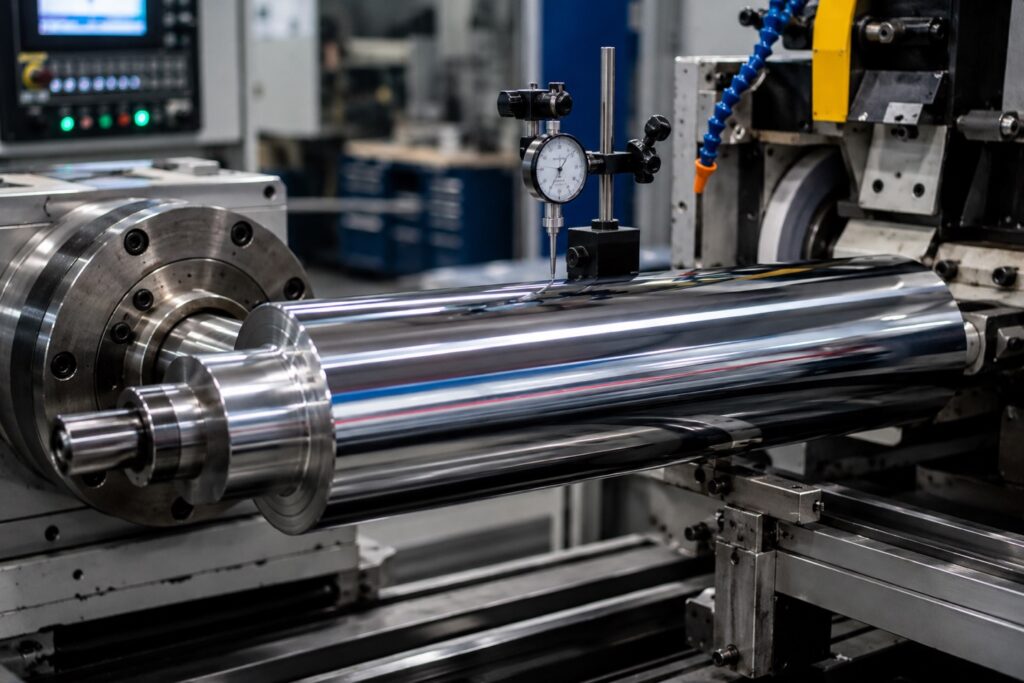
But in higher-tolerance environments, the roller stops being a passive mechanical component. It becomes part of the process. Precision industrial rollers used in coating, laminating, plastic film processing, battery electrode production, specialty converting, anilox printing, calendering, and thermal transfer all share one trait: the quality of the finished product can only ever be as good as the rollers it contacts.
When that is true, small imperfections in the roller turn into expensive problems. A surface variation of 0.0001″ can show up as visible coating banding. A heat transfer roller that drifts even a few degrees off setpoint can produce localized distortion across the web. A roller with edge wear can introduce repeating defects that an operator chases for an entire shift before anyone thinks to inspect the roller itself.
That last point is where most precision roller problems hide. Teams troubleshoot the symptom long before they suspect the component. Martin Solutions Group has spent more than two decades building, repairing, and refurbishing precision industrial rollers for manufacturers whose tolerances are measured in ten-thousandths and millionths of an inch.
Why Precision Manufacturers Choose Martin Solutions Group
When precision rollers directly affect coating quality, product consistency, and manufacturing uptime, choosing the right engineering partner matters.
Martin Solutions Group helps manufacturers restore damaged rollers, reverse engineer obsolete components, improve production performance, and manufacture new precision rollers built for demanding industrial applications.
- Ultra-low TIR precision grinding
- Hard chrome plating and optical mirror finishes
- Reverse engineering when OEM drawings are unavailable
- Repair, refurbishment, or new roller manufacturing
- Engineering support from experienced roller specialists
Request a Precision Roller Evaluation
Upload drawings, specifications, photos, or production details if available.
"*" indicates required fields
When the roller becomes part of the process
• Dimensional tolerances measured in ten-thousandths or millionths of an inch.
Precision coating and laminating processes routinely specify 0.0001″ TIR, taper, and crown, with surface finishes called out in Ra rather than ranges. Some of our existing coating and adhesive customers rely on us to hold 0.0001″ TIR, 0.0001″ taper, and 0.0001″ on the crown across the full face of the roller. Bearings can be specified to within a few millionths of an inch to maintain those tolerances over the life of the roller.
• Thermal stability across the entire roller face.
Heat transfer rollers, chilled rollers, and hot oil rollers must often hold surface temperature within 1°F of setpoint, end to end. Internal fluid dynamics, wall thickness, and core material all influence whether that is achievable in real production conditions or only on paper.
• Repeatable surface interaction with delicate substrates.
Films, nonwovens, foils, battery electrodes, and specialty materials punish roller surfaces that drift out of specification. A roller that performed well at commissioning can become the limiting factor on yield long before it shows obvious damage.
These are the environments where the difference between an acceptable roller and a precision roller shows up directly in product quality, throughput, and scrap rate.
Industries We Support
- Film & Flexible Packaging
- Coating & Converting
- Plastic Extrusion
- Laminating
- Battery Manufacturing
- Printing
- Specialty Industrial Manufacturing
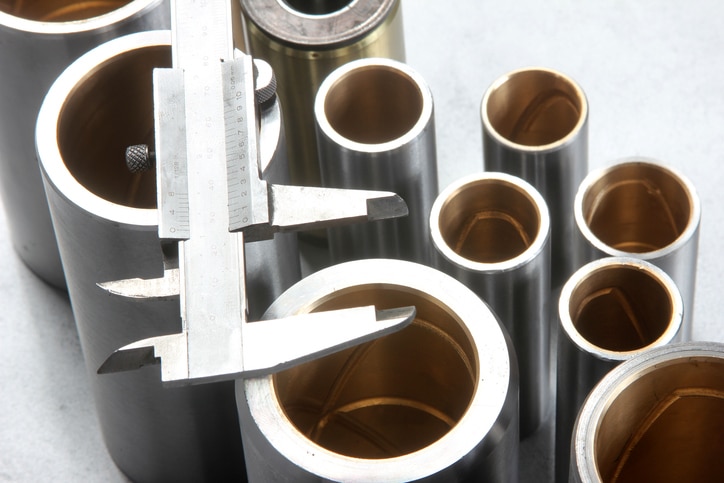
Precision capabilities for tight tolerance work
Precision Roller Capabilities
- New precision industrial rollers
- Precision roller repair
- Hard chrome restoration
- Optical mirror finishes
- Low TIR grinding
- Reverse engineering
- Industrial roller refurbishment
Precision chrome rollers and hard chrome plated rollers
Low TIR rollers and precision ground rollers
Optical mirror finish rollers
Tight tolerance crown, taper, and surface finish control
Symptoms that point back to the roller
- Repeating defects at intervals that match roller circumference
- Edge to center variation in coat weight, gloss, or laminate adhesion
- Localized hot or cold spots that do not correlate with the heating or cooling system
- Chatter, vibration, or audible runout under load
- Premature wear concentrated in one zone of the roller face
- Difficulty holding temperature setpoint despite functioning control systems
- Tracking issues that survive tension and alignment adjustments
- Gradual increases in scrap rate without an obvious upstream cause
Any one of these symptoms can have non-roller causes. When more than one is present, or when a single symptom persists through the obvious upstream fixes, the roller is worth a hard look. That includes dimensional inspection, surface profilometry, and, where applicable, verification of the internal fluid circuit.
Don’t Replace a Roller Until It Has Been Evaluated
Our engineering team evaluates each application individually and recommends the most cost-effective solution based on performance requirements, production goals, and remaining roller life.
What this looks like in practice
Consider a representative scenario from precision coating work. A chrome plated coater applicator roller is approaching the end of its recommended service life. The operator notices intermittent coating banding, not enough to scrap product, but enough to produce out of spec samples on QC pulls roughly once per shift.
The first round of troubleshooting focuses on the obvious: coating formulation, viscosity, web tension, doctor blade pressure. Everything checks out. The defect persists.
When the roller is finally pulled and measured, TIR has drifted from the original 0.0001″ specification to roughly 0.0008″. Still within what would be considered acceptable for many applications, but well outside what this particular coating process requires. The chrome surface shows micro pitting in the wear zone.
A new replacement roller would cost the customer five to six figures and months of lead time. Refurbishment, which includes chemical removal of the existing chrome, re-plating, precision grinding back to the original specification, full bearing inspection, and where applicable rebalancing, restores the roller to original tolerance in a fraction of the time and at a fraction of the cost.
This pattern is common enough that we built much of our shop capability around it. Finite Element Analysis (FEA) and Computational Fluid Dynamics (CFD) for thermal applications. Surface engineering for coating, printing, and converting. Dimensional recovery work for rollers that have drifted but are not yet end of life.
Designed Around Your Manufacturing Process
Rather than offering a standard solution, Martin Solutions Group engineers each roller around your production equipment, materials, operating environment, and finished product requirements.
Precision roller applications we support
Adhesive coating, tape coating, and precision coating rollers
Plastic film processing rollers
Acrylic and polycarbonate sheet rollers
Battery electrode and separator film rollers
Thermal transfer, calendering, and specialty converting
One Partner Throughout the Entire Roller Lifecycle
Our objective is always to maximize production performance while minimizing unnecessary replacement costs and downtime.
Industrial roller repair, refinishing, and refurbishment
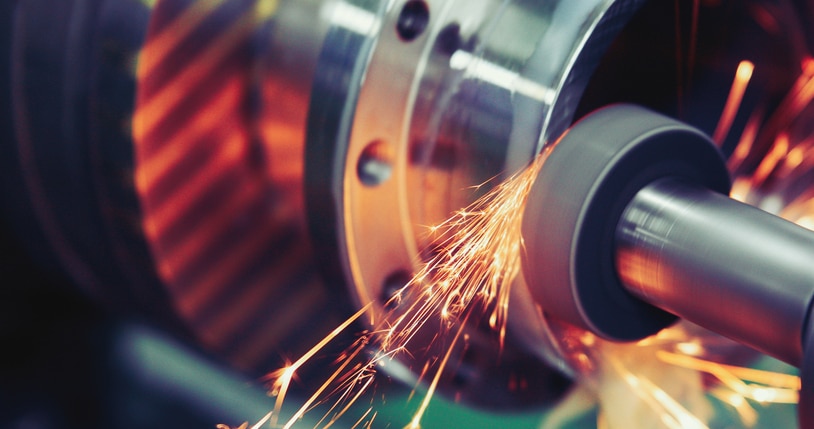
Precision roll repair and regrinding
Industrial roll refinishing services
Refurbish industrial rollers, including journal and bearing work
When refurbishment beats replacement
A new roller is sometimes the right call. A refurbished one frequently saves the customer tens of thousands of dollars and weeks of production time. Without a real evaluation, it is a guess.
Engineering capabilities behind precision roller work
- Finite Element Analysis (FEA) for structural and load-related performance
- Computational Fluid Dynamics (CFD) for thermal applications and internal fluid circuit design
- Reverse engineering of rollers where original drawings are unavailable or out of date
- Surface engineering across hard chrome, rubber, polyurethane, plasma, HVOF, and specialty coatings
- Custom fabrication of replacement components, journals, and bearing assemblies
- Documented inspection of TIR, taper, crown, surface finish, and balance
These capabilities operate together. A precision chrome roller for a coating application is engineered as a system, with substrate, plating, grinding, and inspection planned in sequence rather than handed off between disciplines.
What to look for in a precision roller partner
- Can they perform FEA and CFD analysis for thermal and high-load applications, or are they relying on the original drawings without verifying performance under your conditions?
- Do they have in-house surface engineering across the coatings your application requires, or are they brokering it out?
- Will they evaluate whether your roller can be refurbished before quoting replacement?
- Can they meet TIR, taper, and crown specifications in the 0.0001" range with documentation to back it up?
- Do they support on-site repair where downtime makes shop work impractical?
- Can they reverse engineer and fabricate components when original drawings are unavailable?
- Do they understand the downstream production consequences of dimensional, surface, and thermal variation, not just the roller specification in isolation?
Martin Solutions Group built our precision roller practice around these questions. For more than two decades, we have worked with manufacturers in coating, laminating, nonwovens, printing, specialty plastics, battery production, and thermal transfer, including customers whose tolerances are measured in millionths of an inch.
Why Manufacturers Continue to Choose Martin Solutions Group
Instead of simply replacing worn rollers, we help customers improve coating consistency, restore production tolerances, extend equipment life, and reduce unnecessary downtime.
Frequently asked questions
Request an evaluation
Whether you need a new precision roller, repair an existing roller, restore a hard chrome surface, or reverse engineer an OEM component, Martin Solutions Group is ready to help.
Submit your drawings, specifications, or production requirements and our engineering team will evaluate your application and recommend the best solution for your manufacturing process.